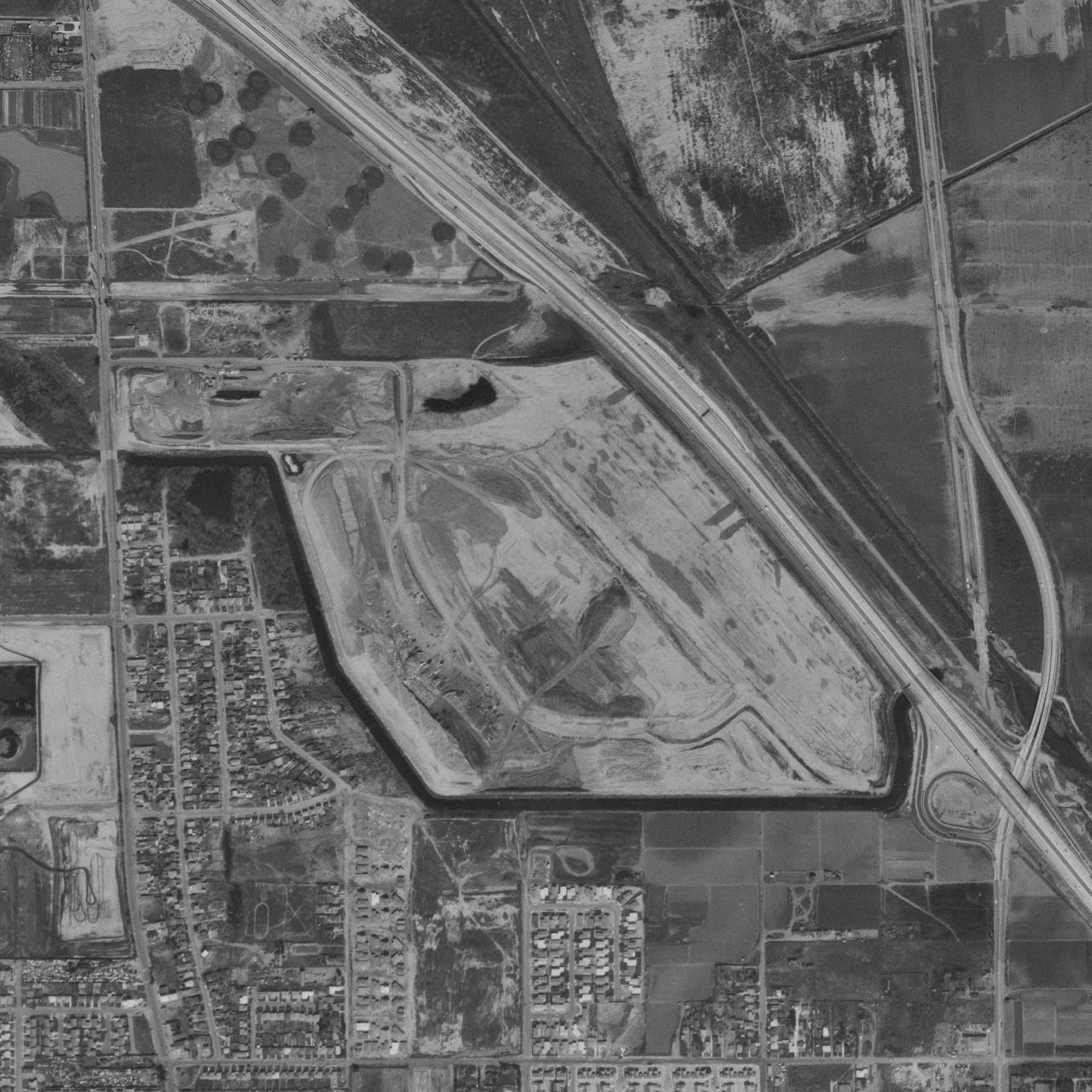
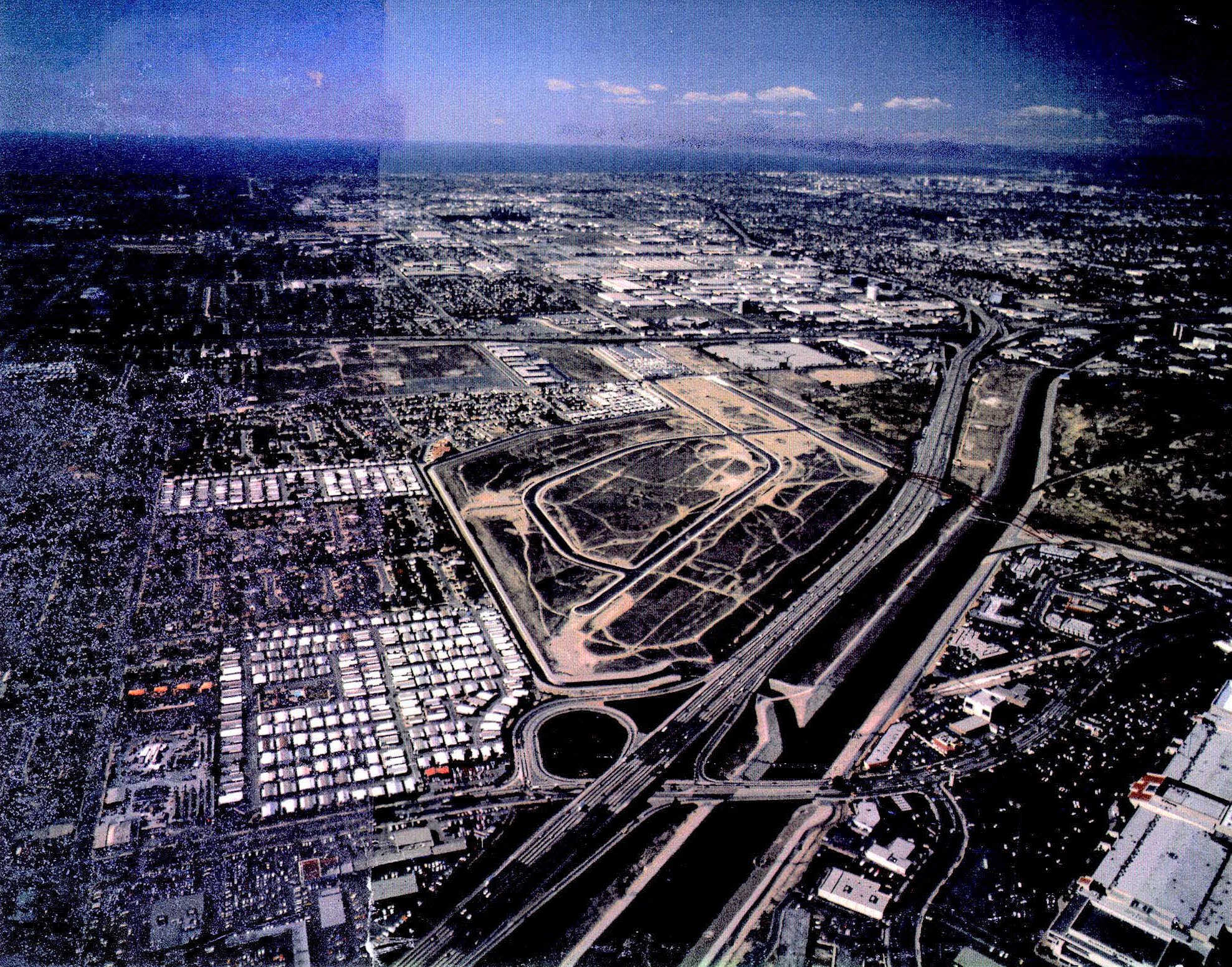
The Cal Compact Landfill Site is a former landfill which consists of five waste “cells” separated by haul roads which were built on native soil, and which operated from 1959 until approximately 1968. Clean-up of the landfill and implementation of remediation systems are subject to oversight by the Department of Toxic Substance Control (“DTSC”). For more information on the Cal Compact Landfill site, visit the DTSC EnviroStor page by clicking the button below.
Landfill operations on the Cal Compact Landfill were performed from 1957 to 1965, at which time the landfill was closed and covered with a layer of dirt. An estimated 6.2 to 6.3 million cubic yards of solid municipal waste and 6.3 million gallons of liquid industrial waste were disposed of on site, with a total estimated landfill volume of 7.8 million cubic yards.
1965-1988
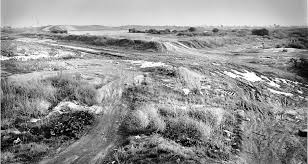
After landfill operations ceased, the site remained vacant for over 20 years. Two initial environmental investigations were conducted in 1978 and 1981 to characterize the landfill contents.
Credit: Final Work Plan to Perform a Remedial Investigation, Bryan A. Stirrat & Associates, 1989.
1988-1995
In 1988, the Department of Toxic Substances Control (DTSC) issued a Remedial Action Order (RAO) to 12 different parties potentially responsible for the contamination of the site (Docket No. 87/88-040). Only one, BKK Corporation, responded to the RAO. Beginning in 1990, BKK Corporation, the California Department of Health Services (the predecessor agency to DTSC), and a potential developer, Metro 2000, collaborated on the Remedial Investigation (RI) to identify and characterize the extent of contamination on- and off-site. The investigation took place over the course of several years, during which time groundwater monitoring wells were installed on-site, and soil, air, surface water, soil gas, and ground water samples were collected and analyzed for contamination.
1995-2006
After completion of the RI, BKK submitted a Remedial Action Plan (RAP) to address on-site contamination. Due to the nature of the contamination, the site was divided into two separate Operable Units (OUs): the Upper OU and the Lower OU. The Upper OU consists of the surface soils, the waste zone above and within the Bellflower Aquitard, and the Bellflower Aquitard down to, but not including the Gage Aquifer. The Lower OU includes the Gage, Lynwood, and Silverado Aquifers, and all other areas impacted by the geographic extent of any hazardous substances that may have migrated or may migrate from the Upper OU. The Lower OU will continue to be monitored, but no remediation is necessary at this time.
The RAP analyzed the threats to surface water, ground water, soil, and air on site, and determined that the most appropriate response included a groundwater extraction and treatment system (GETS), a clay cap over the areas filled with waste, and a landfill gas collection and control system.
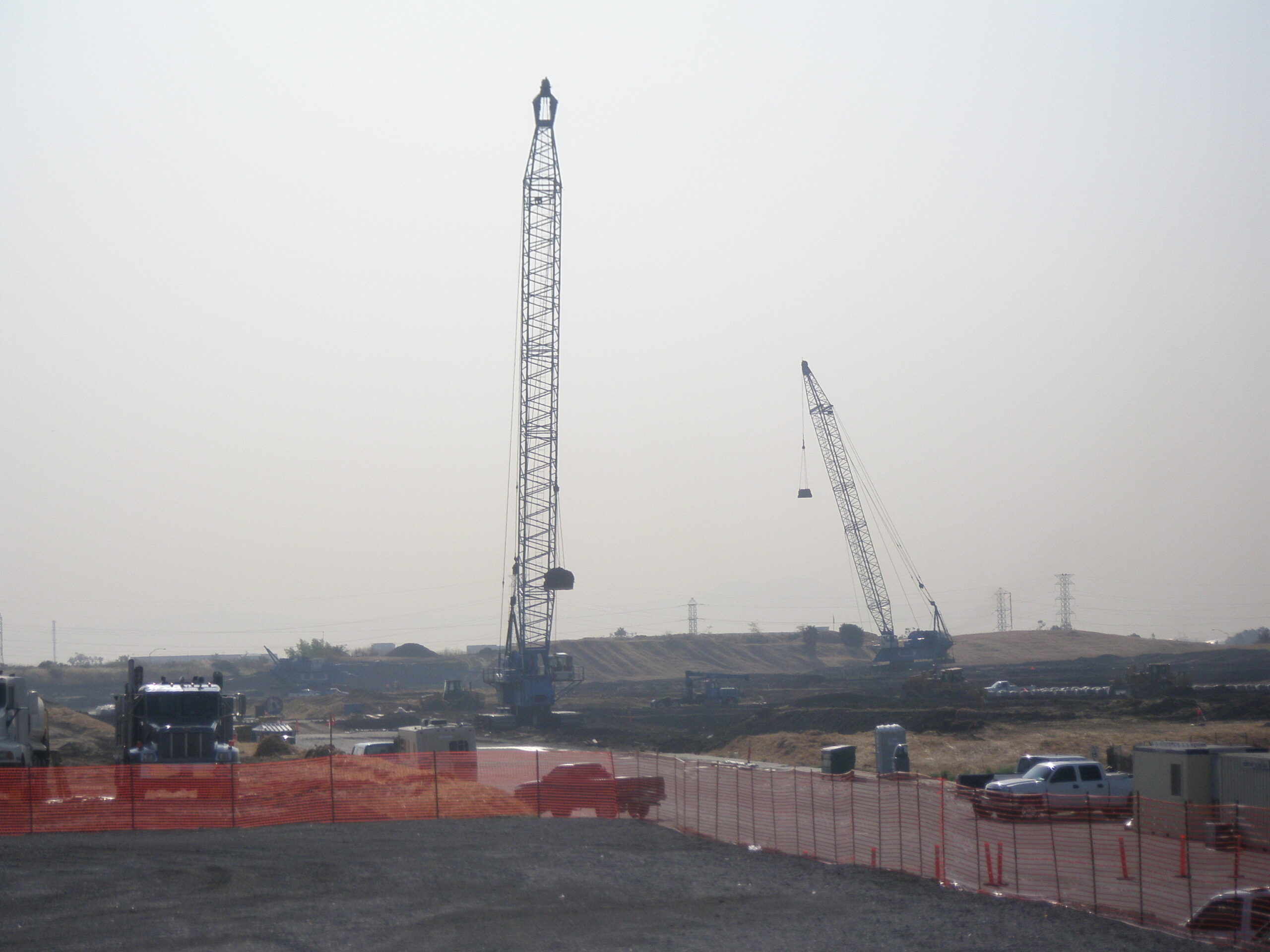
Two Deep Dynamic Compaction Rigs at Carson Marketplace. April 23, 2008. Credit: Unknown.
2006-2009
After the completion of the RAP, the site was the subject of multiple development proposals, but no real progress was made until the mid-2000s, under the Carson Marketplace plan for development. An Environmental Impact Report (EIR) was approved for the project in 2006, followed by the installation of the GETS, portions of the gas collection and treatment system, and portions of the cap. In a 2009 Explanation of Significant Differences, a linear low-density polyethylene (LLDPE) membrane was permitted in place of clay as a component of the landfill cap. Deep Dynamic Compaction (DDC), a method used to compress soil to reduce settlement over time by dropping a tamper from a rig, was also performed on-site in preparation for development.
2009-2017
Lorem Ipsum
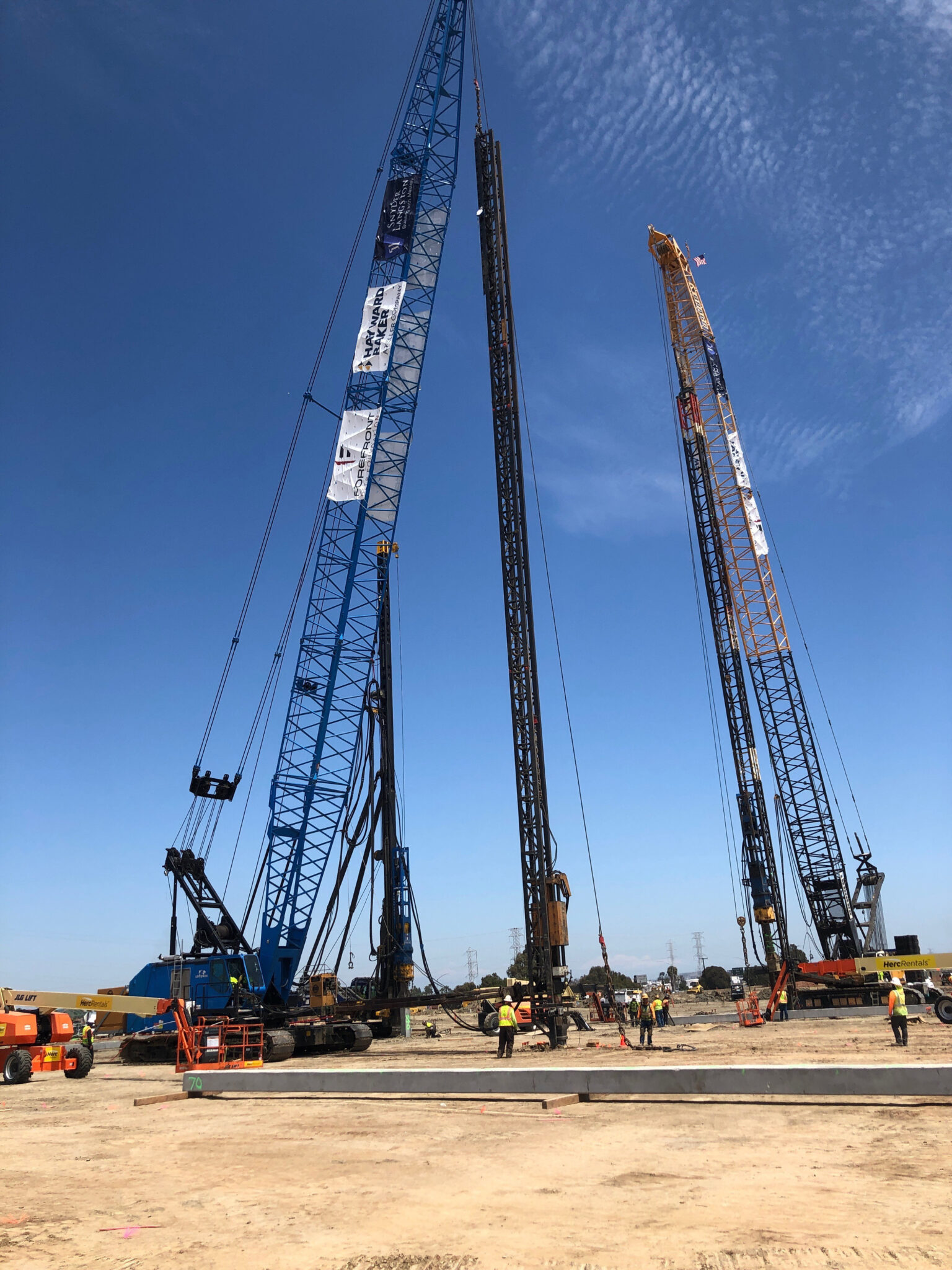
Two Pile Driving Rigs Driving Support Piles for Los Angeles Premium Outlets. May 29, 2019. Credit: Mike Sullivan.
2017-Present
Lorem Ipsum
Development History
Many different developments have been proposed for the Cal Compact Landfill since landfill operations ceased in 1968. The graphic below includes a brief summary of some of the uses that have been proposed.
1970s-1980s
For the first few decades after landfill operations ceased, the Cal Compact Landfill site was considered on and off for a new stadium for the LA Rams or the LA Raiders. While vacant, it was a popular, but illegal, haven for dirt bikers and racers. It was informally known as Jack Rabbit Field.
1991
The LA MetroMall 2000 project was proposed in the early 1990s as a large traditional shopping mall featuring over 200 stores. However, the challenges of remediation and financial obstacles made the project infeasible.
1998
Once plans for the LA MetroMall 2000 fell through, new investors came on board and proposed Hacienda Los Angeles, which would include an entertainment complex and an NFL stadium. Negotiations occurred on and off until 2005.
2005
In 2005, an Irvine-based developer proposed a mixed-use development with a 200-room hotel, movie theaters, and restaurants called Carson Marketplace. In 2006, the project name was changed to the Boulevards at South Bay. The 2008 financial crisis ended plans for redevelopment.
2015
In February 2015, a new stadium proposal was approved by Carson City Council. Around this time, the Carson Reclamation Authority took ownership of the 157-acre parcel. In 2016, the NFL approved a location in the City of Inglewood, terminating negotiations for an NFL stadium on the Site.
2018-Present
In 2018, construction began for the Los Angeles Premium Outlets, a roughly 500,000 square foot premium outlet mall. The remainder of the site will be developed with warehouse distribution in the south and multi-family residential in the northwest portion of the Site.